VivaPro Prep Voice practice, scored

Rehearse it before it counts

Describe the interview, exam or conversation you are facing. An agent researches how it is really run, builds it, holds it with you by voice, and scores you against the real criteria.

Build your first simulation
Free while in beta For individuals and teams
Recording 23:41
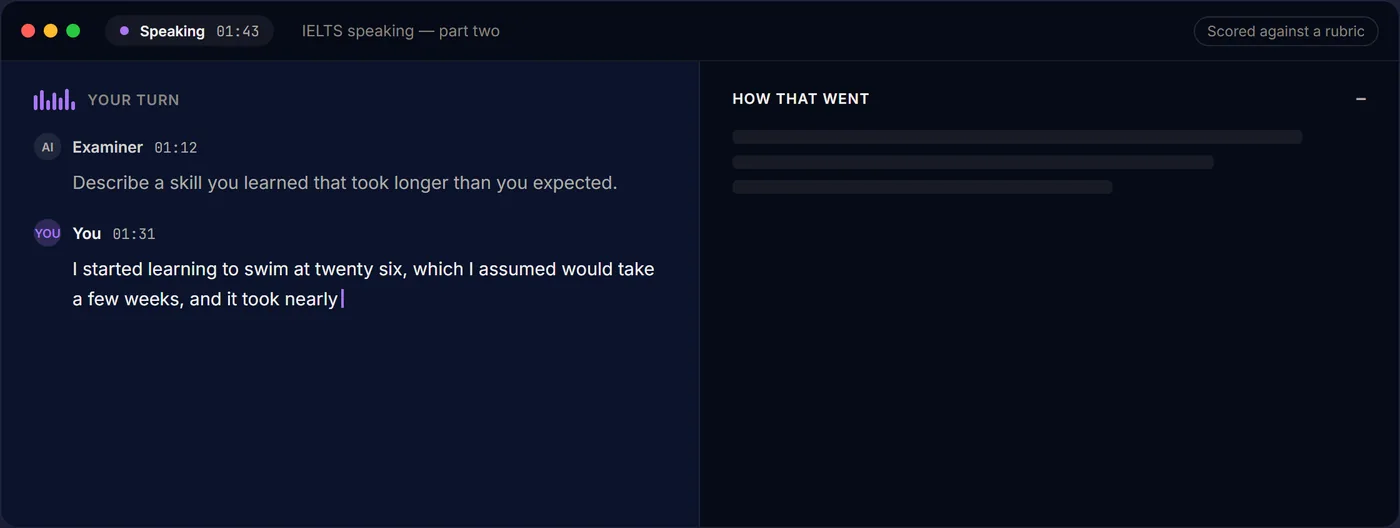
YOUR TURN
AI Examiner 23:41

Describe a skill you learned that took longer than you expected.

HOW THAT WENT

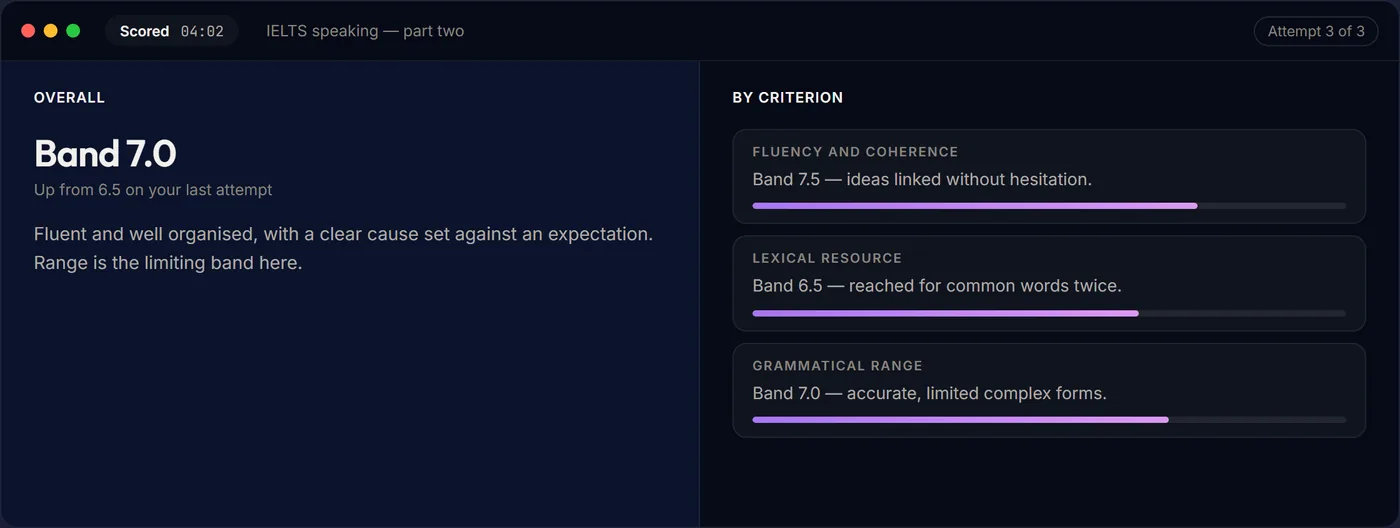
Fluent and well organised, with a clear cause set against an expectation. Range is the limiting band here: the answer leans on common vocabulary where a precise word would score higher.

FLUENCY AND COHERENCE
Band 7.5 - ideas linked without hesitation.
LEXICAL RESOURCE
Band 6.5 - reached for common words twice.

LISTENS WHEREVER YOU TALK

Zoom Google Meet Microsoft Teams Webex Slack huddles Discord Phone calls In the room BlueJeans GoTo Meeting

Reading about it is not practising it.

Speaking under pressure is a separate skill from knowing the material, and it is the one nobody rehearses.

Silent practice is not practice

Rehearsing in your head skips the part that actually goes wrong.

Generic questions, generic feedback

A list of questions off a blog is not the loop the company runs, or the test the board sets.

Nobody scores you consistently

Two reviewers, two verdicts, neither written down.

Describe it. It builds it. You speak it.

Write a brief in VivaPro
1

Write a brief

An IELTS speaking test at band 7. A senior backend loop at a payments company. A refund complaint from an angry customer.

The agent researches and designs it in VivaPro
2

The agent researches and designs it

It searches the web for the real format, questions and scoring, reads the sources, and writes a blueprint: who you will be talking to, the stages, the rubric.

Speak it, then read the score in VivaPro
3

Speak it, then read the score

A live spoken session with a partner that follows up on what you said. Afterwards, every criterion scored with the words that earned it.

Who it is for

Language exams

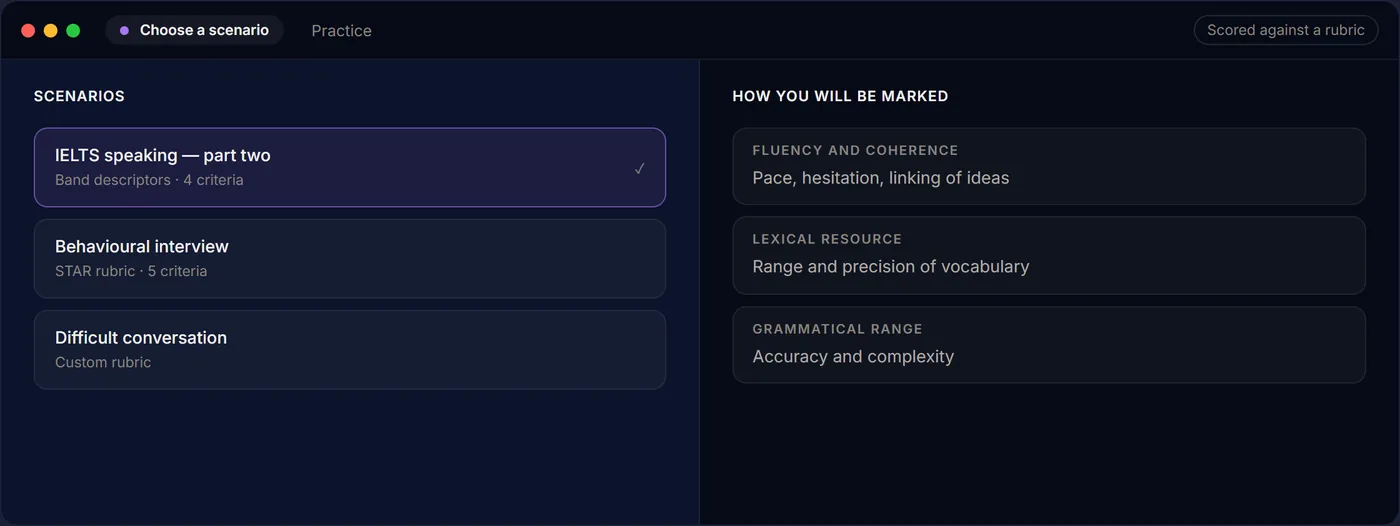
IELTS speaking is marked on fluency, range, grammar and pronunciation, and you find out which one failed you a fortnight later.

Speak the full three-part test with an examiner, get marks band by band with the reasoning attached, and see which band is actually holding your score down.

Interview preparation

Rehearsing in your head skips the only part that goes wrong: saying it out loud while somebody waits for you to finish.

A spoken round built from what the agent found about the company and the role, an interviewer that follows up on what you said, and a competency-by-competency score.

Teams and training

Every reviewer marks differently, nobody writes down why, and two candidates never get the same test twice.

Admins write the brief once. Every member runs the same simulation, is marked the same way, and every attempt stays on record.

What changes

WITHOUT IT WITH IT

Practising in your head.

Practising out loud, under time.

Questions off a blog.

Questions from what is actually asked.

A number with no explanation.

A score with the words that earned it.

Two reviewers, two verdicts.

One rubric, applied the same way every time.

What it does

LIVE

A conversation, not a chat window

You speak, it answers, and it follows up on what you actually said. You can talk over it. The first time you say it out loud should not be the time it counts.

Live 0.24s
EXAMINER Describe a skill that took longer than expected.
YOU I learned to swim at twenty six. It took a year.
EXAMINER Why do you think it took so long?
02

Researched, not improvised

Before it designs anything, the agent searches for the real format, the real questions and the real scoring, reads the sources, and shows you what it found.

03

Marked against real criteria

IELTS on the published band descriptors. Interviews on the competencies the role asks for. Every score points at what you said.

04
$0

One rubric for everyone

Build it once for your organisation. Assign it, and see who completed it and how they did.

05

Run it again

Every attempt is kept and scored the same way, so improvement is visible rather than remembered.

06

Nine languages

English, Spanish, French, German, Italian, Portuguese and Hindi, spoken and scored.

BETA

Free while in beta.

No card, no minutes to buy. We will say what it costs before it leaves beta, and nothing you build now is lost when it does.

Build your first simulation

Questions

What can I practise?

Anything that happens as a spoken conversation: mock interviews, IELTS and other speaking tests, oral exams and vivas, sales and support role-plays, and checks on whether you can explain something you have learned.

How does it know what a real one is like?

Before it designs a simulation the agent searches the web for the current format, questions and scoring criteria, reads the pages, and keeps a cited dossier you can open. Where it could not find something, it says so.

How is it scored?

Against a rubric the agent builds from the real criteria: IELTS band descriptors, competencies for an interview, mastery levels for a learning outcome. Every criterion score cites what you said. Pronunciation is judged from the transcript and flagged as lower confidence.

Can my team use it?

Yes. Build a simulation for your organisation, assign it, and see everyone's completions and scores. Members run it on the organisation's minutes.

What does it cost?

Nothing while it is in beta. When it leaves beta it will be sold like Cue: minutes bought by the hour, spent only while a session is live, with building and scoring included.

Rehearse it before it counts.

Describe the interview, exam or conversation you are facing. An agent researches how it is really run, builds it, holds it with you by voice, and scores you against the real criteria.

Build your first simulation